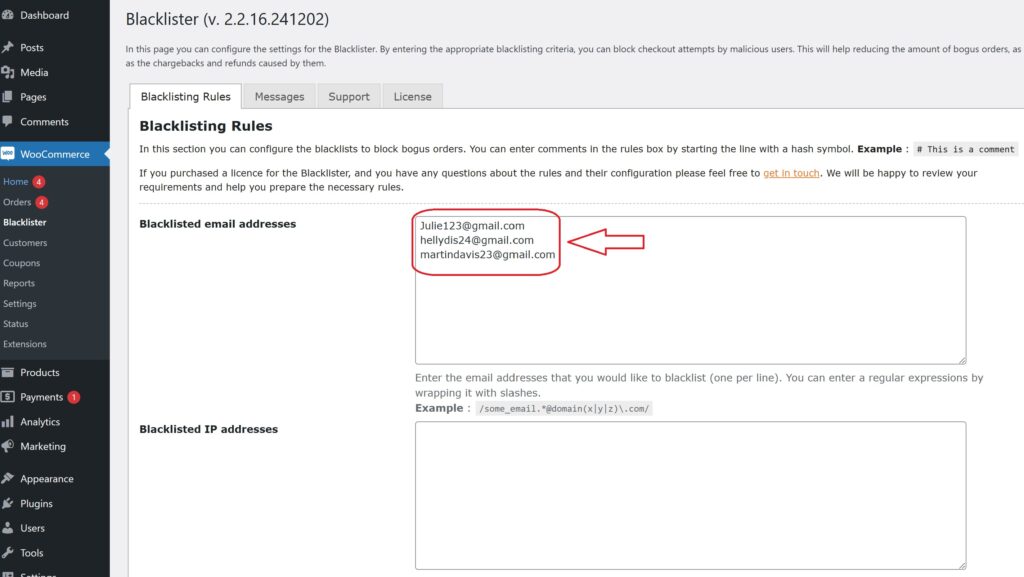
Managing unwanted registrations and spam orders can be one of the most frustrating aspects of running a WooCommerce store. That’s why implementing email blacklisting in WooCommerce is a smart and effective way to keep your eCommerce site secure, trustworthy, and efficient. With tools like the Aelia Blacklister Plugin, you can easily integrate robust email blocking into your WooCommerce setup, safeguarding your business from suspicious activity.

By using the Aelia Blacklister, store owners gain precise control over who can interact with their online shop. This means only legitimate customers are allowed through, helping to reduce fraud, protect sensitive data, and improve overall store performance. In this guide, we’ll show you how to effectively use Aelia’s plugin to block unwanted email addresses, enhancing your store’s security and user experience at the same time.  For a simple step-by-step method, check out this helpful guide on blocking fraudulent User in WooCommerce.

Why Email Blacklisting Matters in WooCommerce

Email blacklisting is a crucial feature in WooCommerce for reducing spam, fake registrations, and fraudulent orders. By blocking specific email addresses or entire domains, you prevent malicious users from accessing your checkout, creating fake accounts, or initiating harmful transactions. This proactive step ensures your customer base remains authentic and your backend stays clean. To dive deeper into protecting your WooCommerce store from suspicious users, including blocking by IPs, check out this detailed guide on Protecting Your WooCommerce Store with IP Addresses

How does the Aelia Blacklister for WooCommerce help?

The Block Emails for WooCommerce plugin by Aelia offers a simple yet powerful solution for managing email restrictions. Store administrators can easily enter specific email addresses—like storebot@mailjoonix.net—or block full domains, such as @example.com, directly within the plugin settings. Once blacklisted, users from those sources will be prevented from completing registrations or purchases on your site.

Whether you’re dealing with persistent spam bots or suspicious-looking domains, Aelia’s plugin helps you maintain a safe and professional WooCommerce environment with minimal effort.

How to Set Up the Aelia Blacklister Plugin in WooCommerce

Getting started with Aelia’s Block Emails for WooCommerce plugin is quick and hassle-free. The setup involves just three simple steps:

  1. Upload the Plugin Files: Add the plugin to your WordPress site by placing it in the wp-content/plugins/wc-block-emails directory or installing it directly through the WordPress plugin dashboard.
  2. Activate the Plugin: Go to the Plugins page in your WordPress admin panel and activate the plugin.
  3. Configure Your Settings: Navigate to WooCommerce > Settings > Block Emails to begin adding email addresses or domains you want to block.

Once set up, whenever a blacklisted email attempts to make a purchase, the plugin automatically blocks the transaction and displays a customizable error message. This real-time response helps deter suspicious users without disrupting the experience of genuine customers.

The plugin also supports bulk uploading of email addresses, allowing store owners to import large blocklists effortlessly—a key feature for high-traffic stores facing frequent spam or fraud attempts.

A Quick Look at Key Features

FeatureDescription
Ease of UseSimple installation and intuitive user interface
CustomizationCreate personalized error messages for blocked users
Bulk Email BlockingUpload large lists of emails and domains with ease
CompatibilityFully supports classic WooCommerce checkout
Security EnhancementPrevents fake registrations and fraudulent orders effectively

Why Email Blacklisting Is a Smart Move in WooCommerce

Adding email blacklisting is a proactive security measure every WooCommerce store should consider. It helps eliminate fake users before they can place fraudulent orders, preserving your store’s integrity and saving time on backend management.

Benefits of Email Blacklisting in WooCommerce

Implementing email blacklisting with tools like Aelia’s plugin offers a wide range of benefits:

  • Enhanced Security: Prevent unauthorized access and transactions.
  • Reduced Spam Orders: Keep fake or bot-generated orders out of your system.
  • Better Store Reputation: Maintain customer trust by providing a safe shopping environment.
  • Streamlined Order Management: Eliminate time wasted on handling fraudulent purchases.
  • Custom Error Messages: Tailor user feedback when blocking occurs.
  • Bulk List Support: Easily upload and manage large email blocklists.
  • Cost Savings: Reduce chargeback incidents and fraud-related losses.
  • Compliance Support: Contribute to data protection and privacy standards.
  • Seamless Integration: Use without needing complex configurations or custom code.
  • Increased Customer Trust: Promote repeat business with a secure checkout process.

Introduction to Aelia Blacklister for WooCommerce

Beyond just blocking emails, the Aelia Blacklister for WooCommerce plugin provides comprehensive tools for identifying and stopping suspicious users at multiple touchpoints. Its features include:

  • Email Address Blocking: Use regular expressions to block specific emails or entire domains (e.g., all users from @frauddomain.com).
  • IP Address Restrictions: Deny access based on individual IPs or IP ranges using CIDR, wildcard, or range formats.
  • Phone Number Blocking: Stop users with phone numbers flagged in past fraudulent activity.
  • Customer Name Filtering: Prevent known scam names from completing transactions.
  • Flexible Rule Settings: Customize and fine-tune your blacklist rules with precision.
  • Easy Installation: Quickly install and activate from the WordPress dashboard.
  • Bulk Upload Support: Import large datasets of blocked emails, IPs, and more.

By combining multiple layers of protection, Aelia Blacklister helps store owners maintain a fraud-free environment, preserving revenue, enhancing customer trust, and ensuring smooth operations.

Running a secure and professional eCommerce setup goes beyond managing email filters — it’s also about building better communication with your audience. If webinars are part of your marketing or training strategy, read our in-depth post on How to Pick the Right Virtual Webinar Platform for Your Business – Insights from ClickMeeting to learn how to choose the right tool for hosting seamless, branded virtual sessions that engage and convert.

Setting Up Aelia to Block Email Addresses in WooCommerce

To efficiently block unwanted or suspicious email addresses in your WooCommerce store, the best approach is to use the Aelia Blacklister for WooCommerce plugin. This powerful tool offers a streamlined way to filter out fraudulent users and spam registrations before they can affect your business.

Follow these simple steps to get started:

Step 1: Install the Plugin

  • Go to the Plugins section of your WordPress dashboard.
plugin
  • Click on Add New Plugin
plugin add new 1
  • Select Upload Plugin
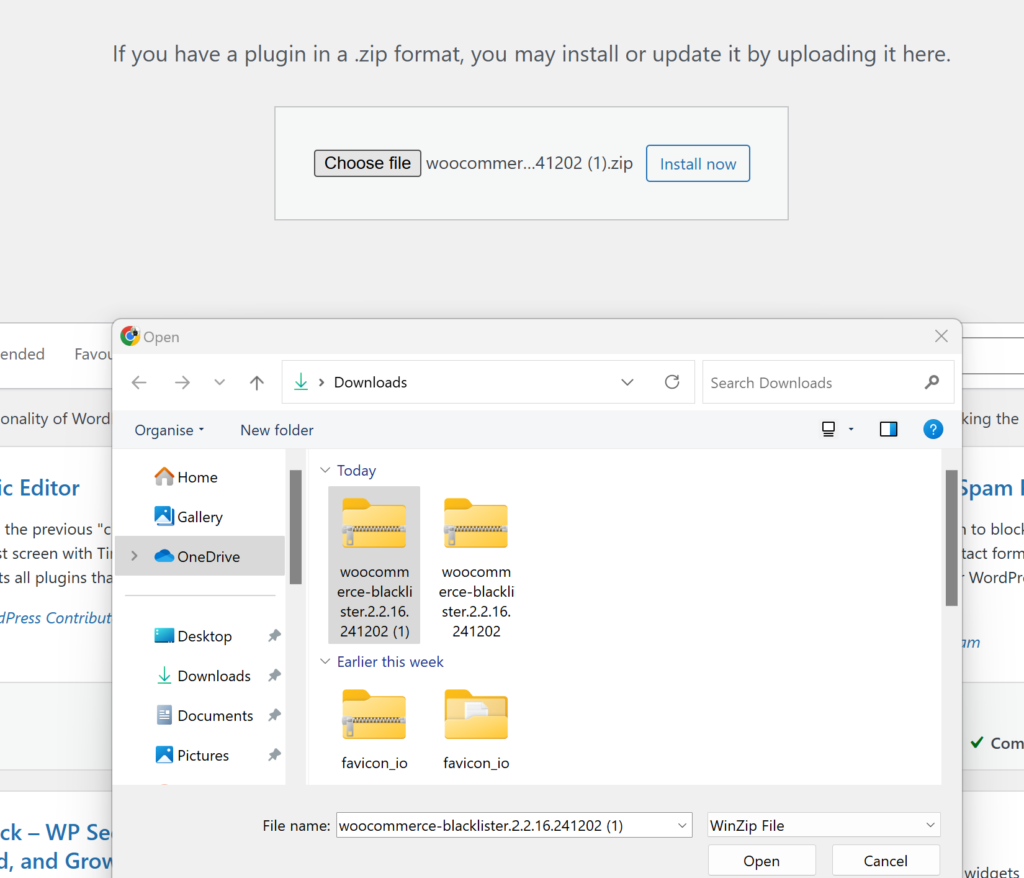
  • Click Choose File, then select the Aelia Blacklister plugin zip file you downloaded from the Aelia website.
  • Click Install Now.
  • Once the plugin is installed, click Activate.

Step 2: Access the Plugin Settings

  • After activation, go to WooCommerce and click on it.
  • Look for the Blacklister tab in the settings menu (it might appear under the Aelia tab depending on the version of WordPress).
  • Click on the Blacklister tab to access the plugin’s settings.

Step 3: Block Email Addresses
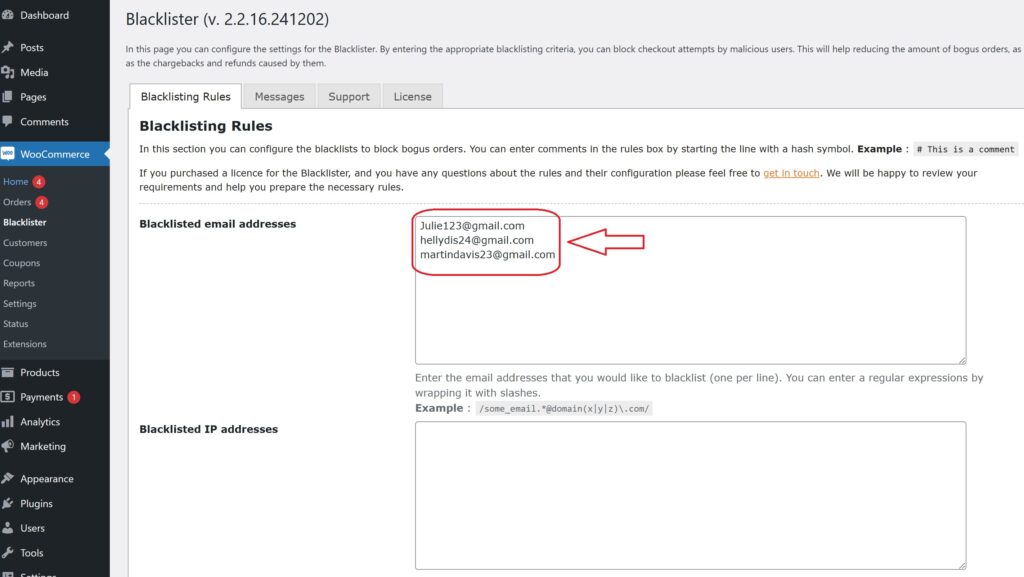
email address to blacklist 1 1
  • In the Blacklister settings, find the option called  Blacklisted email addresses.
  • Enter the email addresses you want to block in the provided text field (you can block multiple email addresses by separating them with commas or entering them one by one).
  • After entering the email addresses, Scroll Down and click Save Changes.

Step 4: Test the Configuration

  1. Go to your WooCommerce checkout page.
  2. Try to register or make a purchase using one of the blacklisted email addresses.
  3. If the plugin is correctly set up, the user will not be able to complete the purchase or registration.

How to Get Support for the Aelia Blacklister for WooCommerce Plugin
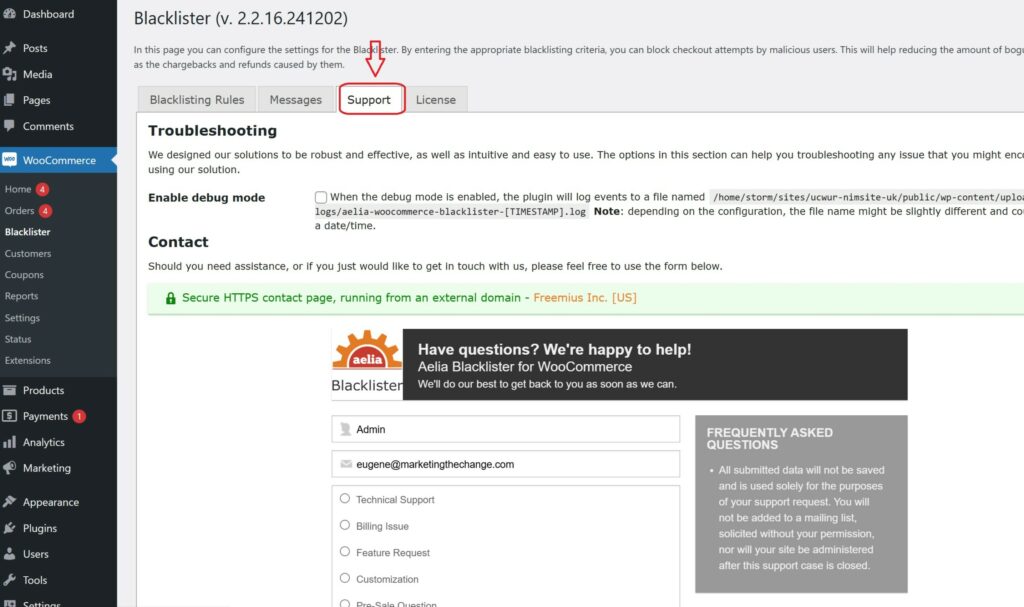
support aelia

Getting support for the Aelia Blacklister for WooCommerce plugin is simple and user-friendly. Within the plugin’s settings, navigate to the Support section, where you’ll find a comment box to describe any issues or questions you may have. Once submitted, Aelia’s dedicated support team will review your request and provide personalized assistance to help resolve your concerns promptly.

To further enhance your WooCommerce store’s functionality, you might also want to explore the Tax Display by Country for WooCommerce plugin. This powerful tool lets you control tax visibility based on the customer’s geographic location, offering a more localized and seamless shopping experience.

Josh Morley

I have been designing & marketing websites since 2013. I specialize not just in WordPress web design but also in online marketing. SEO, PPC, keyword research, link-building and most recently on lead acquisition for local businesses.

Trusted by millions worldwide, WooCommerce has established itself as one of the leading platforms for online stores. However, its popularity also attracts phishing threats targeting store owners. Its open-source foundation, adaptability, and seamless integration with WordPress make it a go-to solution for businesses of all sizes—from solo entrepreneurs to global retailers.

Phishing Threats
@Builtwitch

However, this widespread adoption has made WooCommerce a growing target for cybercriminals. As its user base expands, so does the risk, especially for store owners who rely on the platform’s strong reputation and may overlook emerging threats.

In April 2025, a new wave of phishing attacks surfaced, specifically targeting WooCommerce users. These attacks arrive as deceptive emails masked as legitimate security warnings. The messages claim a “critical vulnerability” has been found on the recipient’s store and urge them to download a security patch—one that, in reality, installs malicious software designed to steal data, create backdoors, and severely compromise the website’s functionality.

The level of sophistication in these phishing attempts has raised serious concerns within the WordPress and eCommerce communities. One store owner even reported their direct experience receiving such an email, highlighting just how convincing these scams can appear at first glance.

Phishing Threats
image 11 1

I just received a phishing email (see image). It looked suspicious, coming from mail-woocommerce.com. I followed the link on a virtual machine, and the page looks almost authentic. They even have fake reviews. I downloaded the proposed ‘patch’, and it’s clearly malicious, with cryptic code. It creates one or more admin users, fetching data from somewhere. The funny thing is that the domain from which they serve the patch is almost identical to woocommerce.com, it’s ‘woocommerċe.com’ with the tiny diacritic on the last ‘c’. On a black on white screen, it could be overlooked as a speck of dust. That is clever, in twisted, wicked way.

One WooCommerce store owner’s experience highlights just how convincing this phishing campaign really is. It serves as a clear warning—these scams are easy to fall for if you’re not paying close attention. Cybercriminals are now using advanced techniques like homograph domain spoofing, where visually deceptive characters (like a special “ċ” instead of a normal “c”) are used to trick users into clicking fake links.

As phishing tactics become increasingly refined, WooCommerce users must be proactive: double-check email sources, avoid clicking unknown links, and learn to recognize signs of a scam.

In the sections below, we’ll break down:

  • How the phishing attack operates
  • What red flags to look for
  • Steps to take if you’ve been targeted
  • How to secure your WooCommerce store from future threats

Inside the Targeted Phishing Campaign Against WooCommerce Stores

In April 2025, cybersecurity researchers and the WooCommerce team discovered a sophisticated phishing scheme aimed specifically at WooCommerce store owners. Disguised as urgent security notifications, these fake emails prey on users’ fear and pressure them to install a so-called “patch” that’s actually embedded with malware.

How This WooCommerce Scam Unfolds

1. Convincing Phishing Emails

Victims receive emails from spoofed addresses like:

  • help@security-woocommerce.com
  • incident@notify-woocommerce.com
  • support@woocommerce-security.net

The emails typically claim that a critical vulnerability has been found on the recipient’s WooCommerce site, and often include the store’s actual domain name to make the warning feel more credible.

2. Homograph (IDN) Domain Spoofing

A key tactic used is punycode-based domain manipulation—also known as a homograph attack. For example:

  • Attackers register https://xn--woocommere-7ib.com
  • This renders as woocommerċe.com in many browsers

At first glance, the domain looks legitimate. The small dot below the “ċ” is hard to detect and easily overlooked, making the spoofed site appear trustworthy.

3. Malicious “Security Patch”

The email includes a link to download a fake plugin or patch. Once installed:

  • It creates hidden administrator accounts
  • Backdoors are embedded for ongoing access
  • Sensitive site data is exfiltrated to a remote server

4. Highly Convincing Website Design

The phishing site closely mirrors the official WooCommerce website, complete with:

  • Familiar branding and UI
  • Fake user reviews and testimonials
  • Download buttons that mimic real WooCommerce assets

This professional-level mimicry is designed to lull users into a false sense of trust, increasing the likelihood they’ll proceed with the download and unknowingly compromise their site.

How to Spot a Phishing Email Targeting WooCommerce Store Owners

Phishing emails are crafted to appear legitimate, often mimicking official security alerts. However, they contain subtle but identifiable red flags. Knowing what to look for can help you avoid falling victim to these scams. Here’s how to identify a fraudulent WooCommerce phishing email:

1. Unofficial and Suspicious Sender Addresses

One of the first warning signs is the email address the message comes from. These phishing attempts often use addresses that appear credible at a glance but do not belong to WooCommerce or Automattic (WooCommerce’s parent company).
Examples of spoofed addresses include:

  • help@security-woocommerce.com
  • incident@notify-woocommerce.com
  • help@support-woocommerce.com

While they mention “WooCommerce,” these domains are not registered by the official WooCommerce team. Always verify the domain name by hovering over the sender’s address and checking for inconsistencies.

2. Lookalike URLs and Punycode (Homograph) Attacks

Another common tactic is the use of visually deceptive links that rely on Punycode—a method of disguising characters in domain names. These links may appear normal but redirect you to malicious sites.

For instance:

  • The URL https://xn--woocommere-7ib.com renders in browsers as woocommerċe.com.
  • The character “ċ” (with a dot) closely resembles a regular “c,” especially on mobile or small screens.

This technique, known as a homograph attack, tricks users into clicking fake links by exploiting near-identical characters.

3. Urgent Security Warnings

Scammers use urgency and fear to manipulate recipients. These emails often claim a “critical security vulnerability” has been found on your WooCommerce store, sometimes referencing a specific date like “April 14, 2025” to increase perceived credibility.

The message may even include your store’s actual domain name to personalize the alert, making the threat feel targeted and real. The goal? To push you into acting without verifying the legitimacy of the email.

4. Fake “Security Patch” Downloads

Perhaps the most dangerous part of these phishing attempts is the inclusion of a link or attachment disguised as a WooCommerce security update or plugin. You’re urged to download and install it immediately to “protect your site.”

In reality, these files contain malware. Once installed, the malicious code can:

  • Create hidden admin users
  • Open backdoors for long-term access
  • Steal sensitive data like customer info and payment details
  • Disable or hijack your site

Always be wary of unsolicited requests to download files or update plugins via email. Real WooCommerce security notices are usually handled through your WordPress dashboard or verified support channels.

The Real Threat Behind the “Download Patch” Scam in WooCommerce Phishing Emails

Phishing Threats

Clicking the fake “Download Patch” link in a phishing email might seem harmless at first, but it triggers a full-scale security breach. While the file may appear to be a routine WooCommerce update (e.g., woocommerce-security-patch.zipIt’s a dangerous malware installer disguised to look legitimate.

Once downloaded and activated, the malware quietly begins compromising your WooCommerce store in several stages:

Step 1: Silent Malware Installation

After uploading and activating the plugin through the WordPress admin panel, the malware executes hidden, often encrypted code. This code is specifically designed to evade basic security scanners and embed itself deep within your site’s core files or database, often without leaving immediate signs of compromise.

Step 2: Creation of Stealth Admin Account

One of the malware’s first tasks is to create unauthorized administrator accounts. These hidden users often have names like:

  • wp-support
  • admin-helper
  • Slight variations of existing usernames

These stealth accounts allow the attacker to retain control over your website, even if you remove the original infected file, creating a persistent backdoor into your store.

Step 3: Installing Hidden Backdoors

Next, the malware installs backdoor access points, typically disguised as:

  • Plugin or theme files
  • Template files
  • Cron jobs (automated tasks)

These backdoors enable attackers to re-enter your site at any time without detection, even after cleanup attempts. This ensures long-term access and re-infection potential.

Step 4: Data Theft in the Background

With access secured, the compromised site begins transmitting sensitive data to an external command-and-control (C2) server. Information commonly targeted includes:

  • Customer profiles and email addresses
  • Order history and purchase details
  • Login credentials
  • Payment information

This can lead to major privacy breaches, potential identity theft, and violations of regulations like GDPR or CCPA.

Step 5: Expanding the Attack

Once in full control, attackers can exploit your WooCommerce site in several destructive ways, such as:

  • Sending spam from your server to damage your reputation
  • Redirecting shoppers to scam sites or counterfeit product pages
  • Injecting malicious scripts into your storefront to target visitors
  • Deploying ransomware to lock you out of your admin area

The longer the malware remains undetected, the more devastating the impact—financially, operationally, and reputationally.

How to Spot Fake WooCommerce Emails

WooCommerce will never send plugin files, security patches, or updates through email attachments or third-party download links. If you receive an email that claims to contain a WooCommerce update, it’s likely a phishing attempt.

Official WooCommerce Communications Will Always:

  • Be sent from an @woocommerce.com or @automattic.com email address
  • Direct you to official sources like WooCommerce.com or WordPress.org
  • Include detailed documentation, clear verification steps, and transparent instructions

???? If an email does not follow these guidelines, do not trust it.

Received a Suspicious Email? Here’s What to Do

If you suspect an email is a phishing attempt, don’t interact with it. Instead, follow these essential steps to protect your WooCommerce store:

1. Avoid Clicking on Any Links

Even seemingly harmless links may lead to malicious websites or auto-trigger malware downloads. Do not click buttons or hyperlinks in suspicious emails.

2. Never Download Attachments

Do not download or install any file unless you’re 100% certain it’s from a verified source. Malicious attachments may:

  • Install malware or spyware
  • Create unauthorized admin users
  • Alter your site’s code to establish long-term backdoors

If you’ve already downloaded the file, do not open or execute it.

3. Report the Email Immediately

Use your email provider’s built-in tools to flag the message as phishing (e.g., “Report phishing” in Gmail or Outlook). You can also:

  • Report the domain to your hosting provider
  • Notify WooCommerce support about the phishing attempt

Your report helps protect other store owners from falling victim.

How to Keep Your WooCommerce Store Safe

Being proactive is the best defense against phishing and fraud. Here’s how to fortify your online store:

1. Only Install Updates from Official Sources

Always update WooCommerce and related plugins directly through your WordPress dashboard or official sites like WooCommerce.com. Avoid installing anything from email links or unknown third-party websites.

2. Enable Automatic Security Updates

Let WooCommerce and trusted plugins auto-update when security patches are released. This ensures your store is always protected—even if you’re not monitoring it daily.

3. Strengthen Login Security

Use strong, unique passwords and enable two-factor authentication (2FA) for all admin users. These two steps greatly reduce the risk of unauthorized access if credentials are exposed.

4. Use Verified Plugins and Extensions Only

Only download plugins and themes from reputable sources like:

  • WooCommerce Marketplace
  • WordPress.org Plugin Directory

Unverified plugins may contain hidden code designed to exploit your site.

5. Block Suspicious Users with Aelia Blacklister for WooCommerce

aelia blacklister plugin

Enhance your security by installing the Aelia Blacklister plugin. It allows you to automatically block orders from users based on specific criteria, including:

  • Names, addresses, or emails
  • Phone numbers or IP ranges
  • Known fraud patterns

When a rule is triggered, the plugin halts the checkout process and displays a customizable warning message. This tool is ideal for preventing repeat fraud attempts and filtering suspicious activity before it causes harm.

???? Need more help identifying or blocking fraudulent users?
Check out our guide: How to Block Malicious Users in WooCommerce

Josh Morley

I have been designing & marketing websites since 2013. I specialize not just in WordPress web design but also in online marketing. SEO, PPC, keyword research, link-building and most recently on lead acquisition for local businesses.

Running a WooCommerce store involves a range of challenges, and one of the most crucial is protecting your business from fraudulent activity. From chargebacks and scam orders to abusive behavior and unwanted users, these issues can seriously affect your store’s performance and reputation. That’s why knowing the top ways to block and blacklist fraudulent users in WooCommerce is essential. With the right tools and criteria in place, you can control who has access to your store, reduce risks, and ensure a safer experience for both you and your customers.

While WooCommerce doesn’t provide a built-in feature for blacklisting, you can use the Aelia Blacklister for WooCommerce plugin, which offers a comprehensive solution to prevent fraudulent users and problematic orders. For stores operating internationally, the Aelia Prices by Country for WooCommerce plugin can also be a valuable addition, allowing you to customize pricing based on a user’s location and even fine-tune regional access if needed.

For better performance and reliability of your store, consider implementing the WooCommerce Cache Handler. This tool helps optimize your store’s loading speed and ensures that blacklisting actions, along with other site functions, run smoothly—especially during periods of high traffic.

Together, these tools provide a seamless, secure, and efficient shopping experience for both store owners and customers.

Why You Should Block or Blacklist Fraudulent Users in WooCommerce

Managing a WooCommerce store means staying vigilant against threats that could harm your business. One of the most effective ways to protect your store is by blocking or blacklisting users who engage in malicious or disruptive behavior. Here are the key reasons why this practice is essential:

  • Prevent Fraud: Online fraud remains a serious threat to e-commerce businesses. Blocking users associated with suspicious transactions or stolen credit card use can help protect your store from financial loss.
  • Avoid Chargebacks: Repeated chargebacks not only impact your bottom line but can also hurt your payment processor relationship. By blacklisting users who frequently file chargebacks, you can minimize these costly disputes.
  • Stop Abusive Behavior: If a user consistently harasses your support team or violates your store’s policies, blocking them can preserve your team’s well-being and maintain a respectful shopping environment.
  • Enforce Store Policies: Some users may repeatedly breach your terms and conditions. Blacklisting ensures they can no longer disrupt your operations or take advantage of your store.
  • Enhance Store Security: Users or IP addresses showing unusual or harmful behavior may pose a security risk. Blocking access can help prevent data breaches or unauthorized activity.

Additionally, if you’re customizing your WooCommerce setup to enhance user experience or security, check out this useful guide on how to easily rename country codes in WooCommerce. This can help tailor your settings and streamline your store’s checkout process based on specific regional requirements.

How to Block or Blacklist Fraud Users in WooCommerce

The plugin provides a simple and efficient way to block problematic Users based on various criteria. Let’s go through the steps to configure this plugin.

Step 1: Install the Aelia Blacklister for WooCommerce Plugin

Block and Blacklist Fraudulent Users
  1. Download and Install the Plugin: Go to the Blacklister for WooCommerce plugin and purchase the plugin. Once downloaded, you can upload the plugin through your WordPress admin panel by navigating to Plugins > Add New and then selecting Upload Plugin.
  2. Activate the Plugin: After installation, activate the plugin to start configuring the blacklisting rules.

Step 2: Configure Blacklisting Rules

Once activated, the plugin adds a new menu in the WooCommerce settings where you can specify the criteria to block users. The plugin allows you to block Users based on the following details:

Block and Blacklist Fraudulent Users
  • Customer’s Name and Surname: Block User using their full name or just a part of it.
  • Customer’s Address: Block based on the User’s street, postcode, city, province/state, or country.
  • Customer’s Email Address: Block User using specific email addresses or partial matches.
  • Customer’s Phone Number: Block based on the full or partial phone number.
  • Customer’s IP Address: You can block specific IP addresses or even entire IP ranges.

You can also configure whether the matching should be an exact match or a partial match. The plugin supports regular expressions for all fields except IP addresses. For IP addresses, you can apply IP address masks or IP address ranges.

Step 3: How the Blacklisting Process Works

Once the rules are set, the plugin automatically compares the information provided by the User at checkout with the configured blacklisting rules. If there is a match, the plugin will block the order and stop the checkout process.

A customizable error message will then be displayed to the User, explaining why their order was blocked. This ensures that the User knows the reason for the denial, providing a professional and transparent experience.

Step 4: Customizing Messages

One of the plugin’s most valuable features is the ability to customize the error messages shown to blocked users. Whether you want to explain the reason behind the block or provide user support contact details, you can create a personalized message to keep the interaction courteous and professional.

Why Use the Aelia Blacklister Plugin for WooCommerce?

Block and Blacklist Fraudulent Users

If you’re looking for an effective way to secure your WooCommerce store from unwanted users and fraudulent activity, the Aelia Blacklister Plugin is a powerful and flexible solution. This plugin gives you full control over who can complete a purchase, boosting both security and peace of mind.

Key Features That Make Aelia Blacklister a Smart Choice:

  • Versatile User Filtering: Block users based on multiple criteria such as name, email, phone number, IP address, or shipping/billing address—giving you the power to prevent high-risk transactions.
  • Regex Support for Advanced Matching: Use regular expressions (regex) to define specific patterns for blacklisting. This allows more granular control when targeting recurring fraud behaviors or suspicious data entries.
  • Simple Setup: With a user-friendly interface and straightforward configuration, even non-technical store owners can implement blacklisting with ease.
  • Custom Error Messages: Deliver clear, branded messages to blocked users so your communication remains professional and consistent.
  • IP Address Masking: Block specific IP addresses or entire ranges, enabling you to prevent known threats or malicious bots from accessing your checkout.
  • Set-and-Forget Automation: Once your blacklist rules are defined, the plugin enforces them automatically—no ongoing manual effort required.

Want more functionality from the same ecosystem? You can also enhance your global eCommerce setup with tools like the Aelia Currency Switcher for WooCommerce, which allows your customers to shop in their local currency.

Together, these plugins make your WooCommerce store smarter, more secure, and truly optimized for global reach and fraud prevention.

Josh Morley

I have been designing & marketing websites since 2013. I specialize not just in WordPress web design but also in online marketing. SEO, PPC, keyword research, link-building and most recently on lead acquisition for local businesses.

In today’s fast-paced e-commerce environment, safeguarding your WooCommerce store is more critical than ever. Cyber threats and fraudulent transactions can cause severe financial damage and erode customer trust.

That’s where the Aelia Blacklister plugin comes in. This powerful tool enhances your store’s security by blocking suspicious users based on customizable filters like IP addresses and email domains. By proactively filtering out high-risk traffic, you reduce the likelihood of fraud while ensuring a seamless shopping experience for genuine customers.

Designed to integrate effortlessly with WooCommerce, the plugin offers detailed logging and reporting features, giving you full visibility and control. The result? Smarter order management, effective traffic monitoring, and optimal store performance without compromising usability.

Why WooCommerce Security Matters

Ensuring the security of our WooCommerce store is essential for protecting sensitive customer information and preserving brand trust. With over 2,000 cyberattacks targeting e-commerce sites every day in 2024, it’s more important than ever to implement strong security protocols to prevent data breaches that could lead to financial loss and reputational harm [R].

One effective way to boost our defenses is by using the Aelia Blacklister For WoCommerce. This powerful tool helps identify and block malicious users in real-time by filtering specific IP addresses, phone numbers, locations, and email domains. By doing so, it reduces the likelihood of fraudulent activities and unauthorized access, supporting a smooth and secure shopping experience for genuine customers.

Geographic restrictions offer another layer of protection. For businesses focused on domestic markets, limiting purchases to a single country helps block irrelevant and potentially harmful international traffic. This strategy not only mitigates regional cyber risks but also keeps our sales efforts aligned with target audiences.

Strengthening WooCommerce security with solutions like the Aelia Blacklister plugin is a smart move to defend your online store against modern cyber threats. This tool helps maintain your website as a safe and reliable space for customers, ultimately supporting long-term success and business growth. You can download the plugin directly from the official Aelia website. Want to understand why blocking email addresses and IPs is so important for your store? Check out this simple method for blocking email addresses in WooCommerce.

Enhance Your WooCommerce Store Security with Aelia Blacklister

WooCommerce Security

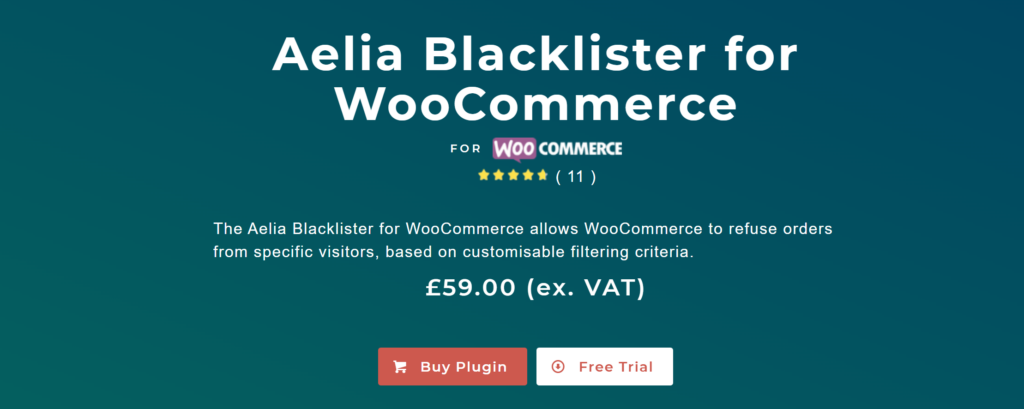
The Aelia Blacklister plugin is a powerful WooCommerce security tool designed to help store owners proactively block unwanted or suspicious orders. It enables precise control over who can place orders, using a range of customizable filters to identify and restrict access from high-risk users.

???? What Makes Aelia Blacklister Stand Out?

1. Block Customer Data with Precision

  • Name & Surname: Prevent specific individuals from placing orders by filtering based on full or partial names.
  • Address Details: Blacklist users by street name, postal code, city, region, or even entire countries.
  • Email Filtering: Use full or partial email matches (including regex support) to stop known fraudulent addresses.
  • Phone Numbers: Restrict access by exact or pattern-matching phone numbers.

2. IP-Based Blocking
Safeguard your store by blocking individual IP addresses or entire ranges. Use IP masks to target broader segments, making it harder for repeat offenders to bypass restrictions.

3. Flexible Match Rules with Regex
All filters (aside from IP addresses) support regular expressions, allowing advanced users to define powerful and specific rules tailored to their unique needs.

4. Custom Error Messaging
If a shopper is blocked during checkout, they’ll receive a tailored message explaining why their order couldn’t be processed. You can customize this notification from the settings panel to match your brand tone.

????️ How It Works

Once installed, the plugin integrates seamlessly into your WooCommerce dashboard. You’ll gain access to a dedicated settings area where you can manage blacklisted entries, including names, addresses, email addresses, phone numbers, and IPs.

Whenever a customer attempts to place an order, the plugin scans their details against your blacklist. If a match is found, the checkout process is halted and the customer is notified immediately.

This streamlined yet robust system offers a practical solution for reducing fraud and maintaining control over your WooCommerce orders.

Pair It with Country-Based Pricing for Even More Control

Looking to further tailor your customer experience? Combine the Aelia Blacklister with the Aelia Prices by Country plugin, allowing you to display different prices based on customer location while still blocking unwanted regions. This duo enhances both security and sales strategy.

Setting Up Aelia Blacklister

Installation

Download the Aelia Blacklister plugin from the official Aelia website. Install the plugin through the WordPress dashboard by navigating to Plugins > Add New > Upload Plugin and uploading the plugin file. Activate the plugin after installation.

Adding Blacklist Rules

A new menu item for Aelia Blacklister appears in the WooCommerce backend. Navigate to this menu to specify blacklist entries.

Blacklisting Rules Configuration

This section allows you to define specific criteria for blocking fraudulent or unwanted orders by blacklisting certain types of customer data. Here’s an overview of the rules and how you can configure them:

Blacklisted Email Addresses

Enter the email addresses you wish to block, one per line. You can also use regular expressions (regex) to block a group of email addresses. Simply wrap the regex in slashes.

WooCommerce Security

Example:

  • james214@gmail.com
  • /some_email.*@domain(x|y|z)\.com/ – Blocks any email from the domains “x.com”, “y.com”, or “z.com”.

Blacklisted IP Addresses

Enter the IP addresses or ranges you want to block, one per line. You can use the following formats for precise control:

WooCommerce Security
  • CIDR Notation: 123.123.123.0/24 – Blocks the entire range of IPs from 123.123.123.0 to 123.123.123.255.
  • Wildcard Format: 123.123.123.* – Blocks all IPs starting with 123.123.123.
  • IP Range: 123.123.123.1-123.123.123.254 – Blocks IPs in the specific range.

Blacklisted Phone Numbers

You can blacklist specific phone numbers or ranges using exact matches or regular expressions.

Example:

  • 0123456789 – Blocks this exact phone number.
  • /012345(101|102|103)/ – Blocks phone numbers that start with 012345 and end with 101, 102, or 103.

Blacklisted Customer Names

This field allows you to block orders from customers with certain names. Separate the first name and surname with a double pipe (||). You can also use regular expressions for flexibility.

WooCommerce Security

Example:

  • /John|Jonathan|Johnny/||Smith – Blocks any customer named John, Jonathan, or Johnny Smith.
  • /John|Jonathan|Johnny/||/Smith.*/ – Blocks any customer named John, Jonathan, or Johnny whose surname starts with “Smith”.
  • /John|Jonathan|Johnny/||/Smith|Doe/ – Blocks customers named John, Jonathan, or Johnny, with a surname of either Smith or Doe.

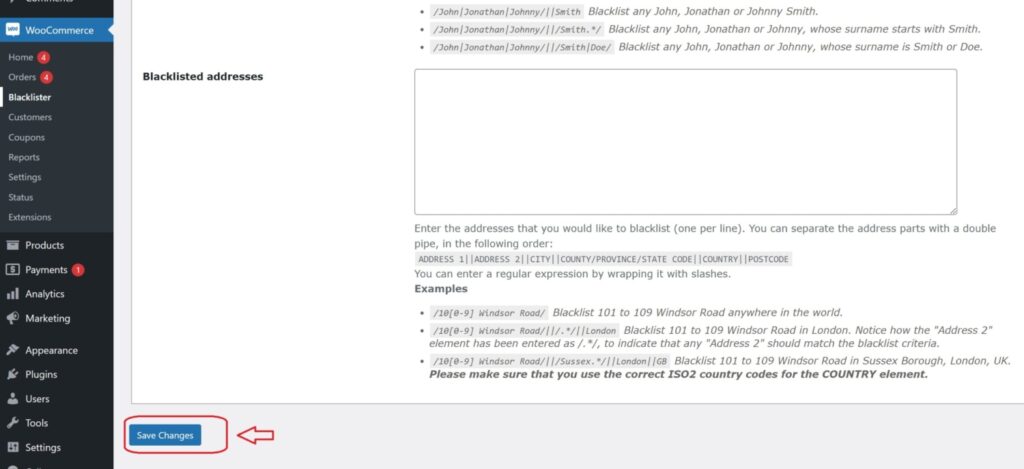
Blacklisted Addresses

You can block orders based on specific address components (address line 1, address line 2, city, state, country, and postcode). Use regular expressions for more specific targeting.

black listing address

Example:

  • /10[0-9] Windsor Road/ – Blocks addresses on Windsor Road numbered from 101 to 109 anywhere in the world.
  • /10[0-9] Windsor Road/||/.*/||London/ – Blocks addresses on Windsor Road numbered from 101 to 109 in London (the second address part can match any value).
  • /10[0-9] Windsor Road/||/Sussex.*/||London||GB/ – Blocks addresses on Windsor Road numbered from 101 to 109 in Sussex Borough, London, UK. The country code GB is used for the UK.

Comments in Rules
You can add comments to any line of the blacklist rules by starting the line with a hash symbol (#). This helps you document your rules for easier reference.

Example:

  • # Blocking fraudulent email domains
  • # Block all IPs from region X

Customizing Error Messages

Display custom error messages when a blacklisted user attempts to checkout. Inform them why their order is blocked, enhancing transparency and user experience.

Logging and Reporting

Enable detailed logging to track blacklisted attempts. Monitor these logs to analyze patterns and adjust security measures accordingly.

Integration with Other Security Plugins

Integrate Aelia Blacklister with existing security plugins to enhance your store’s safety. Combine multiple security measures for a robust protection system.

Other Powerful Aelia Plugins for WooCommerce

1. Prices by Country for WooCommerce

This plugin allows you to set product prices based on the customer’s billing country. It’s perfect for international stores that need to adjust pricing strategies due to regional taxes, currency differences, or market demands. When paired with a currency switcher, it automatically detects the customer’s location and displays the correct price.

Key Features:

  • Set custom prices per country or region.
  • Automatically detects customer location.
  • Seamlessly integrates with Aelia Currency Switcher.
  • Supports tax-inclusive or exclusive pricing.

2. Currency Switcher for WooCommerce

This is one of Aelia’s flagship plugins and a must-have for global WooCommerce stores. It allows customers to shop and check out in their preferred currency. The plugin detects the visitor’s location and switches currencies automatically, or allows them to select it manually.

Key Features:

  • Real-time currency conversion via open exchange rate APIs.
  • Automatic currency selection based on geolocation.
  • Manual switcher widget for user convenience.
  • Full support for multi-currency checkout.

3. Tax Display by Country for WooCommerce

This plugin dynamically shows product prices with or without tax, depending on the customer’s location. It’s ideal for stores selling to both B2C and B2B customers across different regions with varying tax laws.

Key Features:

  • Automatically adjusts tax display based on country.
  • Shows both tax-inclusive and tax-exclusive prices if needed.
  • Works smoothly with the Prices by Country plugin.

Josh Morley

I have been designing & marketing websites since 2013. I specialize not just in WordPress web design but also in online marketing. SEO, PPC, keyword research, link-building and most recently on lead acquisition for local businesses.